
How to Register and Run an ESVCLP Fund in Australia
What fund managers need to set up and run an ESVCLP in Australia, from structuring and AFSL licensing to investor compliance.

Introduction
Setting up an ESVCLP fund in Australia involves more than choosing an attractive tax structure — it requires registration, licensing, trustee infrastructure and ongoing compliance that many emerging fund managers underestimate. Getting this operational foundation right early determines whether a manager spends their first year raising capital and sourcing deals, or untangling structural problems instead.
This guide covers what fund managers need to set up and run an ESVCLP, from initial structuring through to ongoing compliance and reporting.
Quick answer: Running an ESVCLP fund requires registering the correct legal structure, securing AFSL cover (either the manager’s own licence or as a Corporate Authorised Representative of an existing licensee), setting up trustee and fund administration infrastructure, and maintaining ongoing investor compliance including KYC, AML and DDO obligations. Many emerging managers use a specialist platform or outsourced provider to handle this rather than building it in-house.
What Does Setting Up an ESVCLP Actually Involve?
Setting up an ESVCLP means registering the fund structure correctly, securing appropriate financial services licensing, establishing trustee arrangements, and building the operational systems needed to onboard investors, deploy capital and report back to LPs. It’s a structuring and compliance project as much as a fundraising one.
Why Getting the Setup Right Matters
A fund manager who launches without proper AFSL cover, clean fund structuring or investor compliance processes risks regulatory exposure that can surface well after the fund has already deployed capital. Getting this right from day one also builds the operational credibility that makes a manager’s second and third fund easier to raise.
- Correct structuring from the outset avoids expensive rework once investor capital is already committed.
- AFSL cover, whether owned or accessed as a Corporate Authorised Representative is generally required before soliciting most investor capital.
- Clean investor onboarding and compliance processes protect both the manager and the fund’s LPs.
- Professional fund administration frees up a manager’s time for sourcing deals rather than chasing paperwork.
Benefits of a Well-Structured Setup
- Faster fund launches — a clear structuring pathway avoids the delays that come from fixing problems after LPs have already committed.
- Investor confidence — sophisticated LPs and family offices expect proper licensing, trustee arrangements and compliance as a baseline.
- Track record building — every properly structured deal contributes to a manager’s operational credibility for future funds.
- Scalability — infrastructure built correctly from the first fund tends to scale more smoothly into a second or third.
Risks and Challenges for New ESVCLP Managers
- Underestimating the compliance workload. Many first-time managers spend far more of their first year on structuring and compliance than they anticipated.
- Licensing gaps. Operating without appropriate AFSL cover exposes both the manager and their LPs to regulatory risk.
- DIY administration. Attempting to run capital calls, distributions, cap tables and LP reporting manually often consumes time that should go toward deal sourcing.
- Inconsistent reporting. Sporadic or unclear LP communication early on can undermine the trust a manager needs to raise their next fund.
Building Blocks of an ESVCLP Fund
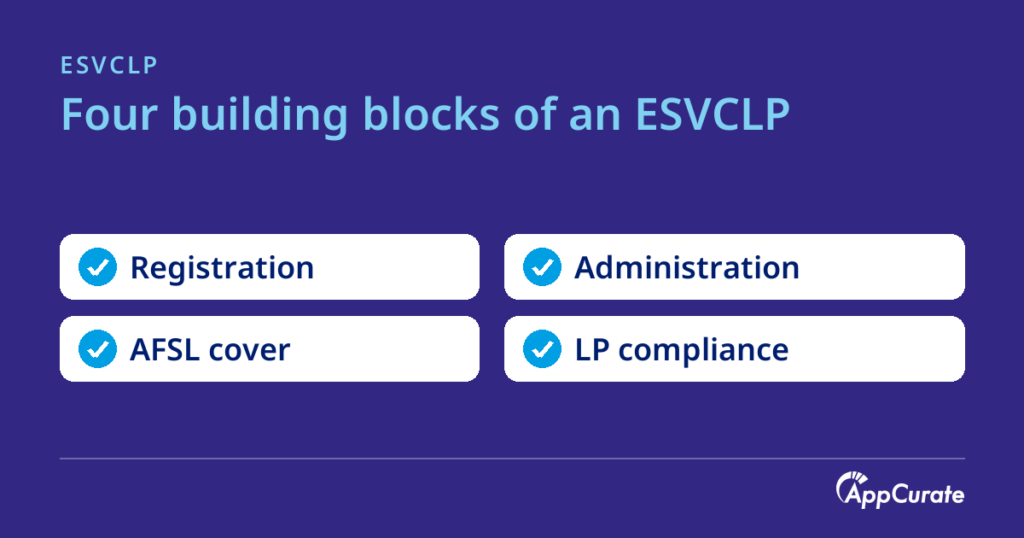
The chart below shows the core operational components a fund manager needs to have in place.
| Building Block | What It Covers |
|---|---|
| Fund structuring & registration | Setting up the ESVCLP and confirming it meets eligibility criteria |
| AFSL licensing | Own licence, or operating as a Corporate Authorised Representative |
| Trustee & fund administration | Capital calls, distributions, share registry, cap table management |
| Investor compliance & reporting | KYC, AML, DDO, wholesale verification, quarterly and annual LP reporting |
Best Practices for Setting Up and Running an ESVCLP
- Decide early whether to pursue your own AFSL or operate as a Corporate Authorised Representative of an existing licensee, since this affects your timeline to launch.
- Engage a specialist adviser or platform to confirm the fund’s investment criteria genuinely meet ESVCLP eligibility requirements before accepting commitments.
- Build KYC, AML and DDO checks into investor onboarding from your very first LP, rather than retrofitting compliance later.
- Set a consistent LP reporting cadence (commonly quarterly updates plus an annual report) from the start of the fund’s life.
- Consider outsourcing fund administration and trustee services early, particularly for a first or second fund, so deal sourcing doesn’t suffer.
- Plan your fund’s tax and reporting calendar (ATO obligations, LP tax statements) at launch rather than reconstructing it under pressure at year end.
- Document how your fund’s investments will meet ESVCLP eligibility criteria before your first deal closes, not retroactively once capital has already been deployed.
It’s also worth building relationships with specialist fund administration providers and legal advisers before you need them urgently. Many of the compliance questions that arise mid-raise or mid-deployment are far easier to resolve with an adviser who already understands your fund’s structure than one being briefed for the first time under time pressure.
Investor Perspective
Investor perspective: When evaluating a new ESVCLP manager, ask specifically how their fund structuring, licensing and compliance are handled — whether in-house, outsourced, or run on a specialist platform. A manager who can answer clearly and confidently is usually further along in building the operational discipline that also shows up in how they run the investment side of the fund.
Key Takeaways
- Setting up an ESVCLP requires correct fund registration, AFSL cover, trustee infrastructure and investor compliance systems.
- AFSL cover can come from a manager’s own licence or from operating as a Corporate Authorised Representative of an existing one.
- KYC, AML and DDO checks should be built into investor onboarding from the very first LP, not added retroactively.
- Many emerging managers outsource fund administration and trustee services to protect time for deal sourcing.
- Operational discipline built during the first fund makes raising a second and third fund significantly easier.
FAQ
Do I need my own AFSL to run an ESVCLP?
Not necessarily. Many emerging fund managers operate as a Corporate Authorised Representative under an existing AFSL holder rather than obtaining their own licence.
What compliance checks are required for ESVCLP investors?
At minimum, KYC identity verification, AML screening, wholesale or sophisticated investor status verification, and Design and Distribution Obligations checks appropriate to the fund.
Can I run fund administration myself as a new manager?
It’s possible, but many emerging managers outsource fund administration and trustee services to a specialist provider so they can focus on sourcing and managing deals.
How often should LPs receive reporting from an ESVCLP?
Quarterly updates plus an annual report are standard practice among well-run Australian venture funds.
How long does it typically take to set up an ESVCLP?
Timelines vary by structure and provider, but proper registration, licensing and compliance setup typically takes longer than first-time managers expect, so it’s worth starting well ahead of a planned capital raise.
Does using a specialist platform replace the need for legal and tax advice?
No. A platform or administrator can handle much of the operational and compliance workload, but independent legal and tax advice specific to the fund’s structure remains important.
Conclusion
Setting up and running an ESVCLP fund is as much an operational and compliance discipline as it is an investment one. Getting fund structuring, AFSL cover, trustee infrastructure and investor compliance right from the outset — whether built in-house or outsourced to a specialist provider — gives Australian fund managers a foundation that supports not just their first fund, but the ones that follow.
For related reading, see our guides on how fund managers and syndicates raise capital, how pre-seed venture funds are structured, lead vs co-invest VC models and how startup investor matching works.